 CSR Funds Receipient Policy
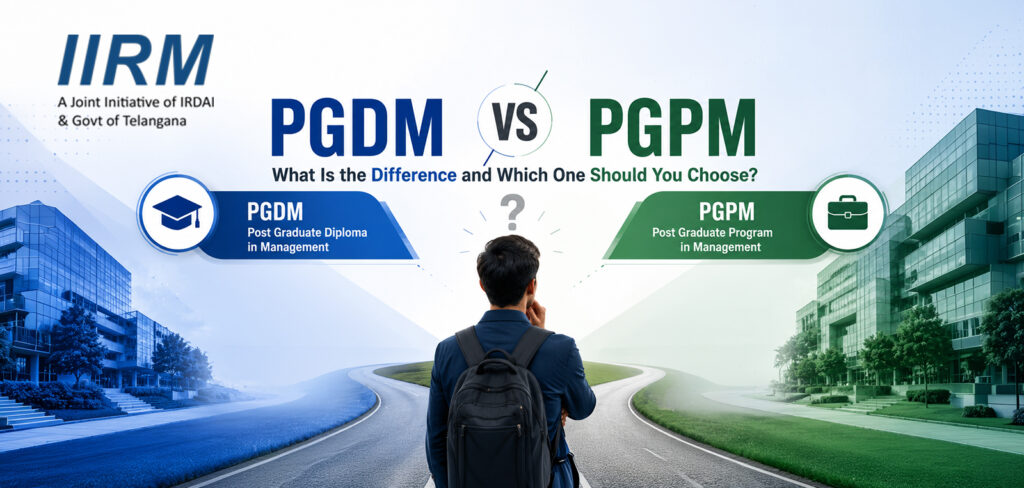
PGDM vs PGPM: What Is the Difference and Which One Should You Choose?
Choosing a management programme after graduation can be confusing. Students often come across different options such as MBA, PGDM, and PGPM while researching best management colleges in India and career opportunities.
Among these programmes, PGDM and PGPM are two common choices. Although both are postgraduate management programmes, they are designed for somewhat different student profiles and career goals.
Understanding the difference between PGDM and PGPM can help you decide which programme fits your education, work experience, and future plans.
What Is PGDM?
PGDM stands for Post Graduate Diploma in Management. It is a management programme designed to develop knowledge across different areas of business.
A PGDM generally covers subjects such as:
- Finance
- Marketing
- Operations
- Human Resources
- Business Strategy
- Business Analytics
- Economics
- Organisational Behaviour
Depending on the institution, students may also have the opportunity to choose electives or specialisations based on their interests.
PGDM programmes usually place importance on practical learning. Case studies, projects, internships, presentations, industry interactions, and business simulations may form part of the learning experience.
The programme is commonly considered by students who want to build a management career after graduation.
What Is PGPM?
PGPM stands for Post Graduate Programme in Management.
The exact structure of a PGPM can vary from one institution to another. In many institutions, PGPM programmes are designed particularly for candidates who already have professional experience and want to develop their management capabilities further.
The programme may cover areas such as finance, marketing, operations, strategy, leadership, business analytics, and general management.
Because participants may already have workplace experience, classroom discussions can include practical examples from different industries and professional situations.
PGDM vs PGPM: The Main Difference
The biggest difference is usually the target student profile and programme design.
A PGDM is commonly suitable for fresh graduates and early-career candidates who want to build a foundation in management.
A PGPM is often aimed at working professionals who already have experience and want to strengthen their management knowledge, leadership skills, or career prospects.
However, eligibility rules are different across institutions. Therefore, students should always check the specific requirements of the college before applying.
Difference in Learning Approach
PGDM programmes generally introduce students to different areas of business before allowing them to develop deeper knowledge in selected areas.
The learning experience may include classroom teaching along with practical activities such as:
- Case studies
- Internships
- Live projects
- Industry visits
- Business simulations
- Group discussions
- Presentations
PGPM programmes can also include these methods, but the learning may place greater emphasis on applying management concepts to workplace situations, particularly when the class includes experienced professionals.
Who Should Choose PGDM?
PGDM can be considered by students who have recently completed their bachelor’s degree and want to develop a career in management.
It may be suitable for someone who wants to:
- Build a strong foundation in business
- Explore different management functions
- Develop professional skills
- Gain industry exposure
- Understand how businesses operate
- Prepare for management roles
Students who are still exploring whether they prefer finance, marketing, operations, analytics, or another business function may also benefit from the broad exposure offered by a PGDM.
When searching for the best PGDM colleges in India, students should compare the curriculum, faculty, industry exposure, internships, specialisations, campus experience, and career support.
Who Should Choose PGPM?
PGPM can be more relevant for professionals who have already spent some time working and now want to take the next step in their careers.
For example, a professional may want to move from an individual contributor role into management or take on broader responsibilities within an organisation.
A PGPM can help such candidates strengthen areas such as:
- Leadership
- Strategic thinking
- Business decision-making
- Team management
- Communication
- Cross-functional understanding
The actual eligibility requirements differ between institutions, so candidates should check the programme’s work experience and academic requirements before applying.
Career Opportunities After PGDM
A PGDM can prepare students for different roles across industries.
Depending on their specialisation and interests, graduates may explore careers in:
- Marketing
- Finance
- Consulting
- Operations
- Business Development
- Human Resources
- Business Analytics
- Product Management
- Sales
- Strategy
The career path will depend on the student’s skills, specialisation, experience, and the organisation they join.
For students researching career opportunities after PGDM, it is important to remember that the qualification is only one part of career development. Practical experience, communication, analytical ability, and continuous learning also matter.
Career Opportunities After PGPM
PGPM graduates can also explore management and leadership positions across different business functions.
Depending on previous professional experience and specialisation, opportunities may include:
- General Management
- Consulting
- Finance
- Marketing
- Operations
- Strategy
- Business Development
- Entrepreneurship
- Product Management
Professionals may use the programme to move into larger responsibilities or transition into a different management function.
PGDM vs PGPM: Which One Is Better?
There is no single answer to which programme is better.
The right choice depends mainly on where you are in your career.
Factor | PGDM | PGPM |
Typical candidate | Fresh graduates and early-career candidates | Working professionals |
Main purpose | Build management foundation | Strengthen management and leadership capabilities |
Work experience | Often not required | Often preferred or required |
Learning | Business fundamentals and practical exposure | Management application and professional development |
Career stage | Starting or early career | Career progression or transition |
Duration | Depends on institution | Depends on institution |
These are general differences. Individual colleges can have different eligibility rules, curriculum structures, and programme formats.
What Should You Check Before Choosing?
Before selecting a management programme, do not compare only the programme names.
Eligibility: Check academic qualifications and work experience requirements.
Curriculum: Understand what subjects and specialisations are offered.
Industry Exposure: Look for internships, projects, guest sessions, and interaction with professionals.
Learning Environment: Consider the faculty, peer group, teaching methods, and campus experience.
Career Support: Review the type of career assistance and industry connections available.
Your Career Stage: Choose a programme that matches your current experience and future goals.
Students comparing top B-schools in India, best colleges for MBA, and best PGDM colleges in India should make the decision based on their individual career plans rather than choosing a programme only because it is popular.
Conclusion
PGDM and PGPM are both management-focused programmes, but they can serve different purposes.
A PGDM can be a suitable choice for graduates and early-career candidates who want to build a broad understanding of business and prepare for professional opportunities.
A PGPM may be more appropriate for professionals who already have work experience and want to develop stronger management, leadership, and strategic skills.
The best programme is ultimately the one that matches your academic background, work experience, career stage, and long-term goals.
If you are exploring management courses in India, take time to compare the curriculum, eligibility, practical exposure, faculty, career opportunities, and learning environment before making your decision.